
Wednesday, 20 September 2017
Brucellosis: A menace in livestock production

Thursday, 17 March 2016
Greenhouse

A greenhouse (also called a glasshouse, or, if with sufficient heating, a hothouse) is a structure with walls and roof made chiefly of transparent material, such as glass, in which plants requiring regulated climatic conditions are grown. These structures range in size from small sheds to industrial-sized buildings. A miniature greenhouse is known as a cold frame. The interior of a greenhouse exposed to sunlight becomes significantly warmer than the external ambient temperature, protecting its contents in cold weather.
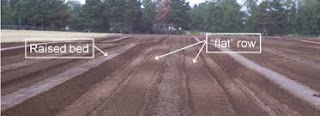
Nursery bed preparation
Sunday, 31 January 2016
Worms- How do you treat infected livestock
Cause
Worms living in the intestines of chickens fall mainly into four categories.
1. Roundworms (Ascarid), usually 5 to 7 cm (2-3 inches) long.
2. Hair worms (Capillaria), only measure 1-1.5 cm long.
3. Caecal worms (Heterakis), usually 1.5 cm long.
4. Tape worms (Raillietina, Davainea), usually 7 to 10 cm long, consisting of many small segments.
Worms living in the intestines of chickens fall mainly into four categories.
1. Roundworms (Ascarid), usually 5 to 7 cm (2-3 inches) long.
2. Hair worms (Capillaria), only measure 1-1.5 cm long.
3. Caecal worms (Heterakis), usually 1.5 cm long.
4. Tape worms (Raillietina, Davainea), usually 7 to 10 cm long, consisting of many small segments.
Women contributions to Agriculture cannot be overemphasized
Women contribute largely to agriculture by providing labour for planting, weeding, harvesting and processing resulting in 70 per cent of food crop production in the country.
Tuesday, 5 January 2016
Newcastle Disease (ND)

Cause
Newcastle disease is caused by a Paramyxovirus (APMV-1). Only one serotype of ND is known. ND virus has mild strains (lentogenic), medium strength strains (mesogenic), and virulent strains (velogenic).
The strains used for live vaccines are mainly lentogenic.
Transmission
Newcastle disease virus is highly contagious through infected droppings and respiratory discharge between birds. Spread between farms is by infected equipment, trucks, personnel, wild birds or air. The incubation period is variable but usually about 3 to 6 days.
Infectious Coryza

Cause
This is a bacterial disease caused by Avibacterium paragallinarum, (in the past known as Haemophilus paragallinarum). There are 3 common serotypes, representing different immunotypes: A, B, C.
Transmission
The disease spreads from bird to bird and flock to flock by contact and airborne infected dust particles and via the drinking water. Spread by equipment and personnel have also been reported. The incubation period varies from 1 to 3 days.
Aspergillosis (Fungal Pneumonia)

Cause
The principal fungus causing Aspergillosis in poultry is Aspergillus fumigatus.
Transmission
Transmission is by inhalation of fungus spores from contaminated litter (e.g. wood shavings, straw) or contaminated feed. Hatcheries may also contribute to infection of chicks.
Monday, 16 November 2015
How to Start Rabbit Farming Business
Rabbits are small sized animal. So it’s very easy to start a commercial rabbit farming business. Make a proper business plan before starting. Here we are describing the most important steps of starting commercial rabbit farming business.
Rabbit Farming
To fulfill the food demand for growing population, we have to find out different ways of food production. The rabbit known as “Micro-Livestock” can be a great source of food production. There is a great opportunity of rabbit farming, and commercial production can be a great source of income and employment.
NEWCASTLE RESISTANT CHICKEN BREED, WHICH ALSO PRODUCES MORE EGGS NOW IN THE MARKET
Poultry farmers can now rear Kuroiler, a high yielding and economical chicken that is highly resistant to perennial poultry diseases like Newcastle, thanks to Ziwani Poultry Farm, who introduced the breed to the Kenyan market last year.
Climate change fuels global conflict – Kerry

Negative effects of climate change such as extreme drought are linked to deadly violence in countries such as Syria and Nigeria, and those still denying there’s a problem are putting the entire planet at risk, the US secretary of state said.
Saturday, 24 October 2015
Blights
The common names of plant diseases often reflect the type of symptom they cause. If you can identify the symptoms as a blight or wilt, for example, you may be able to successfully take steps to limit the disease, even if you don't know the specific pathogen causing the infection. Here are the most common garden plant diseases and disorders.
Remember: If you're considering applying a spray or dust, take time to identify the specific disease problem first so that you apply the appropriate product at the correct time to be effective.
PLANT DISEASES
Anthracnose
Anthracnose, or bird's-eye spot, is a fungal disease. It causes small dead spots that often have a raised border and a sunken center, and that may have concentric rings of pink and brown.
Anthracnose, or bird's-eye spot, is a fungal disease. It causes small dead spots that often have a raised border and a sunken center, and that may have concentric rings of pink and brown.
Bean anthracnose infects beans and other legumes. The symptoms are most obvious on the pods as circular, black, sunken spots that may ooze pink slime and develop red borders as they age. To control, buy disease-free seed, rotate crops, turn under or hot-compost infected plants, and avoid touching plants when they are wet so you won't spread the disease.
Friday, 23 October 2015
Wilts
WILTS
Plants wilt when they don't get enough water. When fungi or bacteria attack or clog a plant's water-conducting system, they can cause permanent wilting, often followed by the death of all or part of the plant. Wilt symptoms may resemble those of blights.
Plants wilt when they don't get enough water. When fungi or bacteria attack or clog a plant's water-conducting system, they can cause permanent wilting, often followed by the death of all or part of the plant. Wilt symptoms may resemble those of blights.
Rusts
RUSTS
Rusts are a specific type of fungal disease. Many of them require two different plant species as hosts to complete their life cycle. Typical rust symptoms include a powdery tan to rust-colored coating. Applying neem oil can help prevent rust by killing spores on the leaves.
Rusts are a specific type of fungal disease. Many of them require two different plant species as hosts to complete their life cycle. Typical rust symptoms include a powdery tan to rust-colored coating. Applying neem oil can help prevent rust by killing spores on the leaves.
Rots
ROTS
Rots are diseases that decay roots, stems, wood, flowers, and fruit. Some diseases cause leaves to rot, but those symptoms tend to be described as leaf spots and blights. Rots can be soft and squishy or hard and dry. They are caused by various bacteria and fungi. Many are very active in stored fruits, roots, bulbs, or tubers.
Rots are diseases that decay roots, stems, wood, flowers, and fruit. Some diseases cause leaves to rot, but those symptoms tend to be described as leaf spots and blights. Rots can be soft and squishy or hard and dry. They are caused by various bacteria and fungi. Many are very active in stored fruits, roots, bulbs, or tubers.
Cankers
CANKERS
Cankers usually form on woody stems and may be cracks, sunken areas, or raised areas of dead or abnormal tissue. Sometimes they ooze conspicuously, and can girdle shoots or trunks, causing everything above to wilt and die. Blights and diebacks due to cankers look quite similar. Cold-injury symptoms may look like, or lead to the development of, cankers and diebacks.
Cankers usually form on woody stems and may be cracks, sunken areas, or raised areas of dead or abnormal tissue. Sometimes they ooze conspicuously, and can girdle shoots or trunks, causing everything above to wilt and die. Blights and diebacks due to cankers look quite similar. Cold-injury symptoms may look like, or lead to the development of, cankers and diebacks.
Thursday, 8 October 2015
Vegetable Crop Farming

Vegetable farming may be pursued at leisure as a hobby or developed from small-scale to a commercial sized one.
If you have a piece of idle land in your backyard, you could try growing some vegetables during your spare time to augment the family's food supply or supplement family income. Starting one is easy as you could just use your usual garden equipment to till the soil for crop growing. Such hobby can eventually be pursued full-time on a commercial scale. A farm a fraction of an acre in size could generate $15,000 in annual sales.
Avian Encephalomyelitis, Epidemic Tremors

Introduction
Avian encephalomyelitis is a viral disease of the central nervous system of chickens, pheasants, turkeys, and quail. It has a worldwide distribution.
Morbidity 5-60% depending on the immune status of the majority of parents, mortality high. Vertical transmission is very important, transmission
occurs over about 1-2 weeks, some lateral. The route of infection is transovarian with an incubation period of 1-7 days; lateral transmission is probably by the oral route, incubation >10 days. Virus in faeces may survive 4 weeks or more.
Subscribe to:
Posts (Atom)